Your Bag
Your bag is empty.
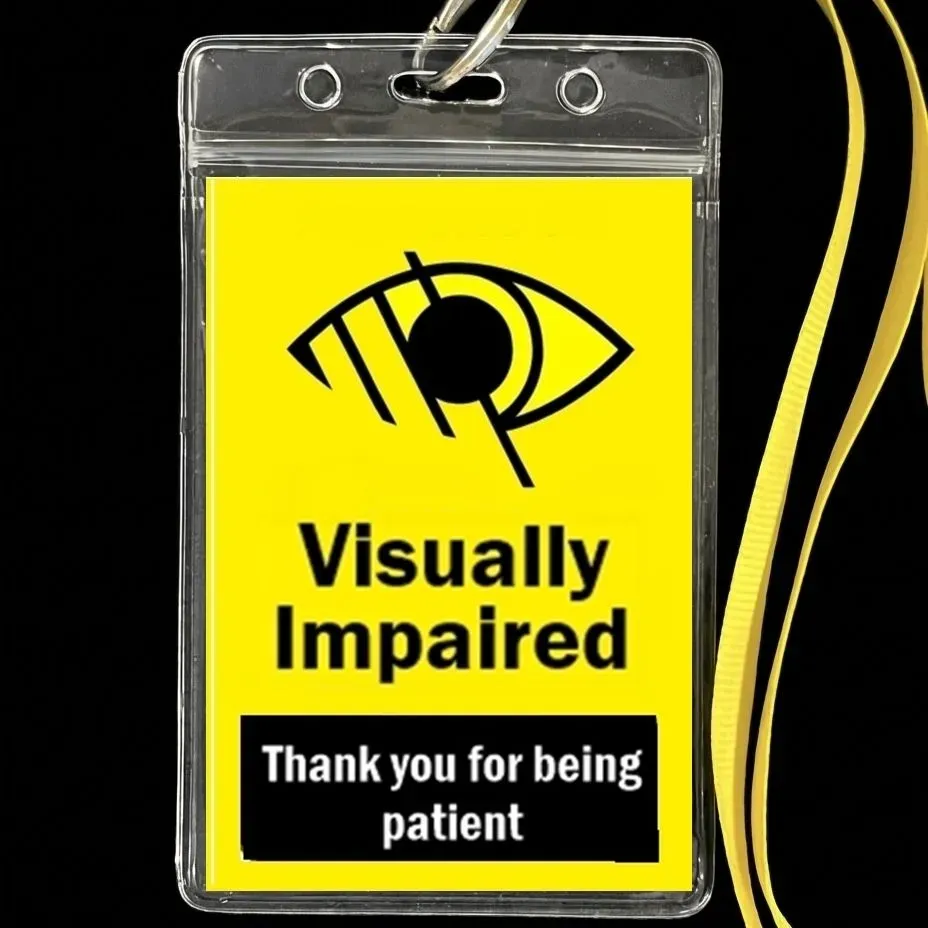


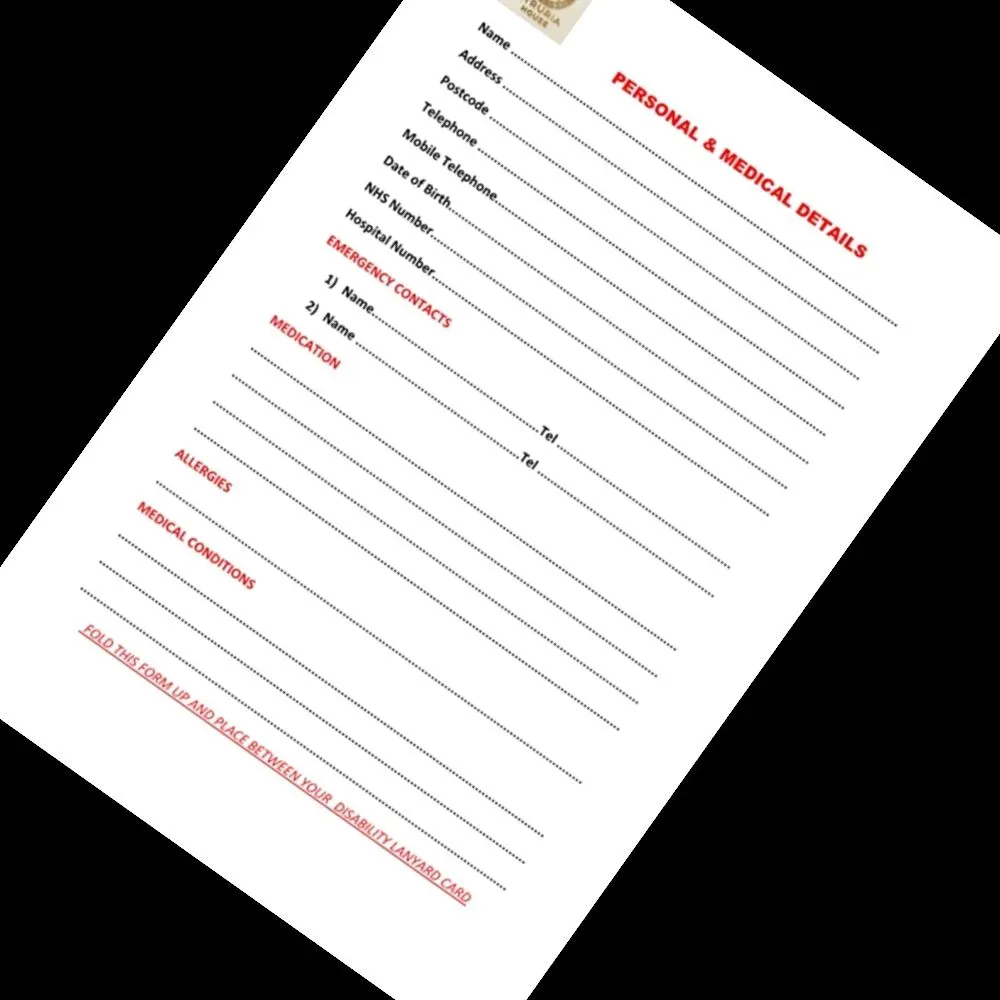
Visually Impaired, badge & lanyard + Medic form
£5.00
The card is printed back and front with a high Viz yellow background , inserted into plastic pouch and suspended on a yellow lanyard. A Medic form is enclosed for personal and medical information in case of emergency.
How to Signal Sight Loss with Confidence
There is a particular kind of exhaustion that comes from having to explain your sight loss again and again - at the bus stop, in a shop, at a crossing, in a queue, or when someone mistakes hesitation for rudeness. For many people, learning how to signal sight loss is not about drawing attention to themselves. It is about making everyday life safer, calmer and more dignified.
The right signal can prevent awkward moments, reduce misunderstandings and help other people respond with a little more patience and care. It can also support independence. Rather than relying on a family member, friend or carer to speak on your behalf, you have a clear way to communicate what others may not immediately notice.
Why signalling sight loss matters
Sight loss is not always obvious to other people. Some people use a long cane or guide dog and are recognised straight away. Many others are partially sighted, have fluctuating vision, tunnel vision, central vision loss or conditions that affect depth perception, light sensitivity or contrast. In those situations, strangers may assume everything is fine when it is not.
That gap in understanding can lead to real difficulties. A staff member may point rather than speak. Someone may step directly into your path. A passer-by may think you are ignoring them when you simply have not seen them. None of this is your fault, but it can still wear you down.
Signalling sight loss helps bridge that gap. It gives people a prompt to slow down, speak clearly, offer practical help and stop making assumptions. Just as importantly, it can remove the pressure of having to start every conversation from scratch.
How to signal sight loss in ways that work for you
There is no single right way to do this. What feels helpful for one person may feel too visible, too limited or simply unnecessary for another. The best approach depends on your level of sight, your daily routine, your confidence, and the situations where you most need understanding from others.
For some people, the clearest signal is a visible mobility aid. For others, it is a badge, lanyard or information card that explains their needs without requiring a long conversation. Some prefer a combination - something visible at first glance, with extra information ready if needed.
What matters most is whether it makes life easier for you.
Visible identifiers in public spaces
A visible identifier can be especially useful in busy places where interactions are brief. Shops, public transport, stations, hospitals and cafés often move quickly, and people do not always stop to think. A simple badge or lanyard can give immediate context.
This can be particularly helpful if your sight loss is not obvious, or if people regularly misread your behaviour. If you pause before stepping off a kerb, stand close to a sign to read it, or fail to make eye contact, a visible cue may help others understand what is happening.
The wording matters. Clear, respectful language usually works best. Short phrases are often easier for strangers to take in quickly, especially in fast-moving environments. If you have specific needs, such as requiring verbal directions rather than pointing, that can also be useful to include on a card.
Information cards for more detailed support
A card can do something a badge cannot - it can explain a little more without forcing you to repeat yourself. This is helpful when you need to communicate practical information to staff, drivers, receptionists or members of the public.
You might want a card that states you are visually impaired, that you may need extra time, or that spoken guidance is more useful than gestures. Some people also include emergency contact details or medical information, depending on their circumstances.
Cards are especially helpful on difficult days. If you are tired, overwhelmed, unwell or anxious, handing over a card may feel much easier than speaking at length. It can also reduce the risk of forgetting important details under pressure.
Clothing and accessories that support visibility
Some people prefer signals that fit naturally into what they already carry or wear. A lanyard, bag tag, cane strap or badge attached to a coat can become part of daily routine rather than an extra thing to remember.
That practicality matters. If something is awkward, uncomfortable or easy to lose, it may not get used consistently. The best signalling tools are usually the ones that feel manageable in real life - on school runs, train journeys, appointments, shopping trips and ordinary walks around the neighbourhood.
At Etruria House, that belief sits at the heart of what we do: simple awareness items can make everyday interactions kinder and clearer when they are designed around real disabled lives.
Choosing between privacy and visibility
One of the hardest parts of deciding how to signal sight loss is balancing privacy with safety. Some people want clear visibility because it reduces stress. Others feel uneasy about wearing anything that publicly identifies them as disabled. Both feelings are valid.
There is no moral duty to disclose your disability more than you want to. At the same time, there are moments when greater visibility may bring practical benefits - easier travel, better support from staff, fewer misunderstandings, and a stronger sense of control.
It does not have to be all or nothing. You may choose different options for different settings. A badge might feel helpful on public transport but unnecessary when visiting familiar places. A card may be enough for appointments. A cane may be essential outdoors but not indoors. Your needs can also change over time, and your signalling method can change with them.
Talking about sight loss when you need to
Even with visible signals, there will still be times when a few words help. The good news is that those words do not have to be polished or lengthy. Simple and direct is often best.
You might say that you are visually impaired and need verbal directions, or that you cannot see hand gestures clearly. If someone offers help, it is perfectly fine to say yes, no, or not just now. If they grab you or make assumptions, it is also fine to tell them what kind of help is actually useful.
Many people worry about sounding demanding. In reality, being clear often makes things easier for everyone. Most people are willing to help when they understand what is needed.
Helping others respond well
Part of signalling sight loss is not only being seen, but being understood properly. Public awareness is still uneven, and some people simply do not know how to help. A visible prompt can open the door, but it does not guarantee a thoughtful response every time.
That is frustrating, especially if you are already dealing with barriers. Still, many small interactions do improve when people are given a clear cue. Staff are more likely to speak directly to you. Fellow passengers may offer space or patience. Shop workers may stop pointing across the room and start describing where things are.
These may sound like small changes, but they add up. Over time, they can make daily life feel less hostile and less tiring.
When signalling sight loss feels emotionally difficult
For some people, the practical side is not the hardest part. The emotional side is. Wearing a badge or carrying a visible card can feel like crossing a line - an acknowledgement that your sight loss is affecting daily life in a way that others can now see.
That feeling is understandable. It can bring up grief, frustration or fear of being judged. It can also feel exposing if your condition is new, fluctuating or not something you have spoken about widely.
If that is where you are, start gently. You do not have to make a dramatic change overnight. You could begin with a discreet card in your purse or wallet, then move to a lanyard or badge if it proves helpful. Think of signalling sight loss not as giving something up, but as giving yourself support.
There is strength in making life easier for yourself.
A practical approach to everyday confidence
If you are wondering where to start, think about the moments that most often go wrong. Is it ordering in cafés, navigating stations, attending appointments, or asking for help in shops? The answer will usually point you towards the best signalling tool.
Choose something you can use consistently, something that feels respectful, and something that reflects your actual needs rather than what you think you ought to choose. The goal is not to appear a certain way. The goal is to be safer, more comfortable and better understood.
You do not need to earn support by struggling in silence. Sometimes the clearest signal is also the kindest thing you can give yourself - and it gives other people a better chance to meet you with the respect you deserve.